How to Choose a Cosmetic Tube Applicator: Brushes, Sponges and Roller Balls
Explore different cosmetic tube applicators and learn what to check when matching brush, sponge and roller-ball designs to your formula and brand.
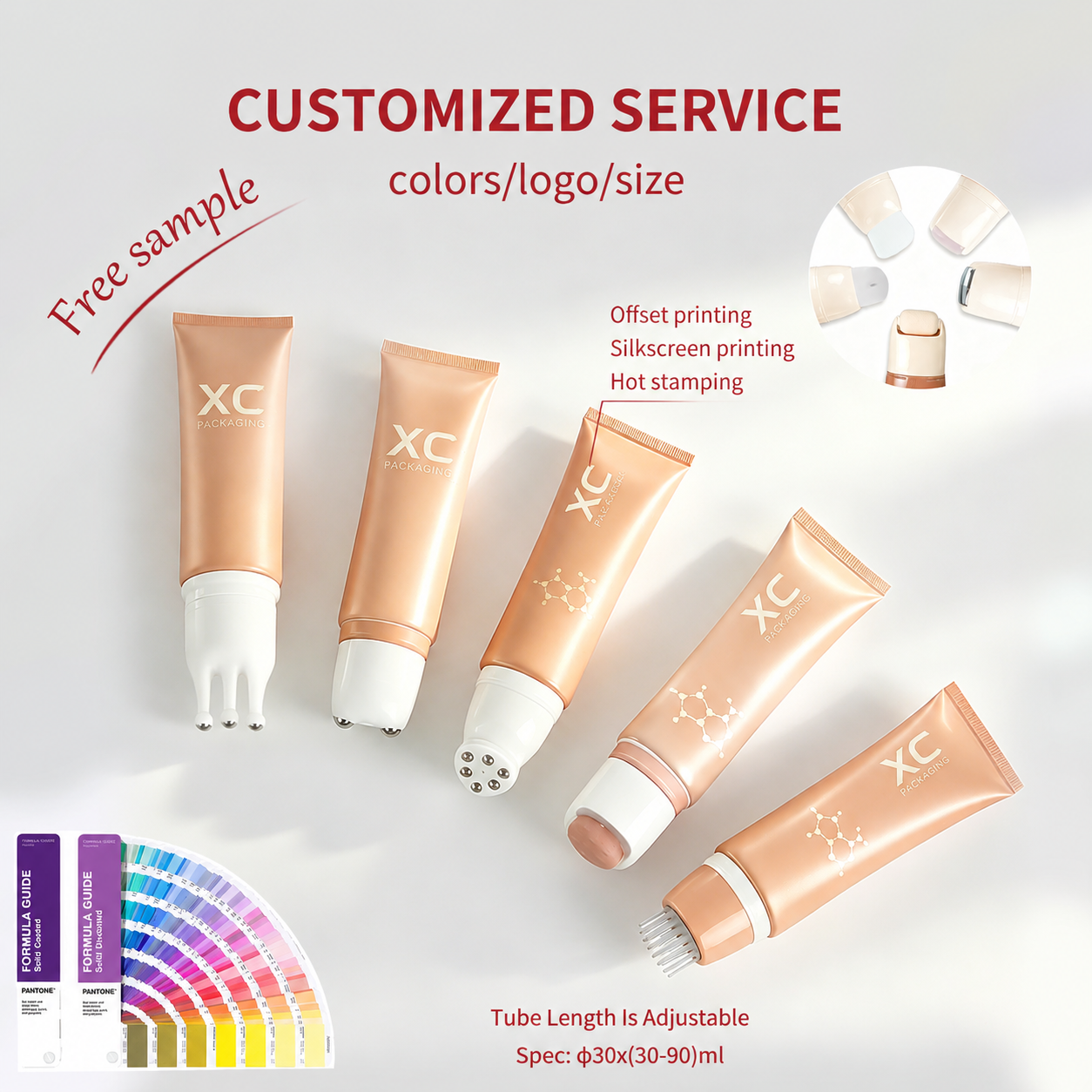
When developing cosmetic packaging, the applicator deserves as much attention as the tube’s color and printed design. Where the formula will be applied—and how customers will use it—helps determine which head design is suitable.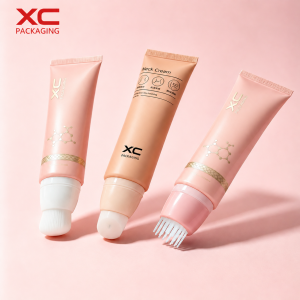
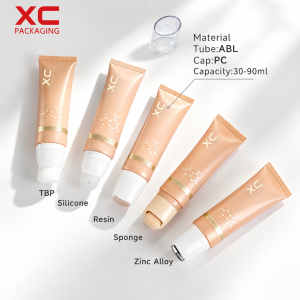
The XC PACKAGING image presents peach-colored tubes alongside several applicator styles, including brush, sponge, metal-contact and roller-ball designs. The collection illustrates how a coordinated packaging appearance can support different application formats.
Brush Applicators: Matching Shape to Application
When considering a brush applicator, review its width, length, flexibility and the position of the dispensing outlet. Even similar-looking brushes can perform differently depending on their construction and the viscosity of the formula.
Check how much product remains between the bristles and how the applicator should be maintained after use. Testing a sample with the intended formula helps reveal dispensing and spreading characteristics that appearance alone cannot establish.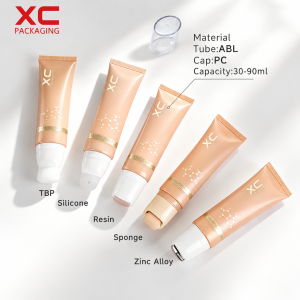
Sponge Applicators: Balancing Contact and Dispensing
The sponge-style head shown in the image offers a broad contact surface. When evaluating this design, consider the sponge material, density, product retention and how the formula is released under pressure.
Compatibility testing should also cover clearance inside the cap, residue after use and whether the applicator can be cleaned as intended. These details help define practical consumer instructions for the finished product.
Metal-Contact and Roller-Ball Designs
Metal-contact surfaces and roller balls offer a different tactile experience from brushes or sponges. With roller-ball designs, the number, arrangement and movement of the balls can influence how the applicator feels during use.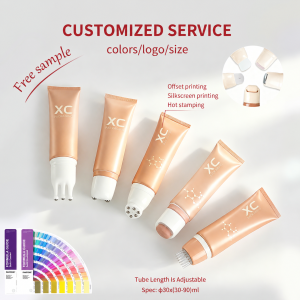
During sampling, check whether the moving parts operate smoothly, whether the formula dispenses consistently and whether leakage occurs. Confirm the exact contact materials and surface treatments in the packaging specification rather than judging them by appearance.
Creating a Coordinated Product Range
Different applicators can still belong to a recognizable product family. Consistent tube colors and logo placement help connect the range visually, while individual head designs distinguish application formats.
The peach tubes and light-colored components in the image demonstrate this approach. A brand can develop a shared visual identity while evaluating different applicators for each formula.
Compatibility between components must be checked early. Not every head fits the same tube diameter, shoulder or connection structure, so the available combinations should be confirmed before finalizing artwork.
What to Check During Sampling
- Formula viscosity and dispensing-outlet compatibility.
- Contact feel and application angle.
- Head protection and cap fit.
- Suitability for the intended filling and sealing process.
- Compatibility between the formula and contact materials.
- Leakage or deformation during repeated use and transport testing.
The right applicator is a combination of appearance, packaging structure and practical performance. Testing these elements together helps turn a design concept into a usable product.
To discuss a cosmetic tube project with XC PACKAGING, prepare your target capacity, formula information, preferred applicator and branding references. Comparing suitable samples is a useful next step toward selecting the packaging configuration for your range.